Quick TransferMoving & Storage
    Talk To A Moving Specialist
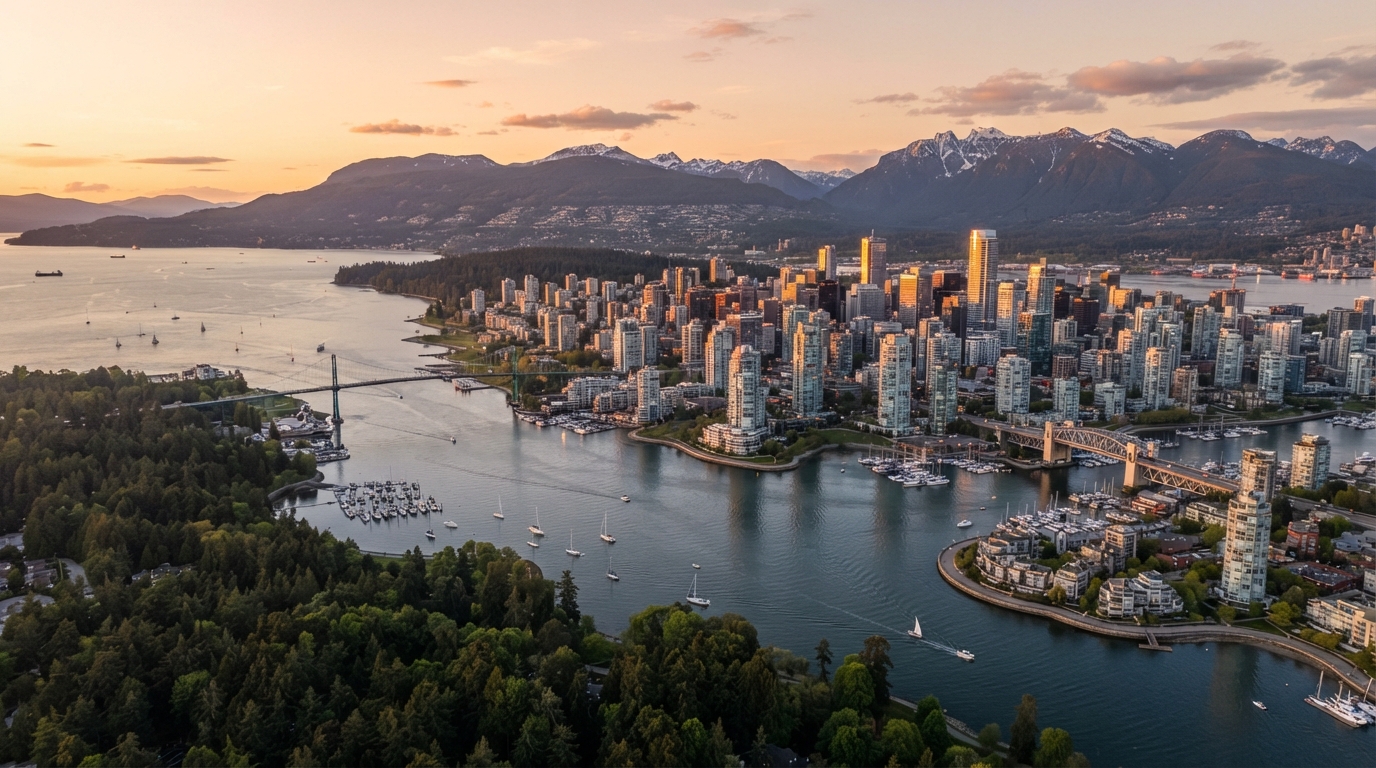
    Aerial view of the Vancouver skyline, Stanley Park, English Bay, and the North Shore mountains at golden hour

    COMMUNITY GUIDE · METRO VANCOUVER, BC

    Vancouver: Your Complete City Guide

    Everything a family needs to actually live in Vancouver, from the neighbourhoods and the rent to the pools, the schools, the transit, and the months you will want a raincoat. Written for people who have already decided to move here.

    By Quick Transfer Moving and Storage
    Read the guide
    Share

    Overview

    A city wedged between the ocean and the mountains, with a raincoat on

    Vancouver sits on a peninsula in southwestern British Columbia, hemmed in by the Burrard Inlet to the north, the Fraser River to the south, and the Coast Mountains rising straight up behind the North Shore. It is the densest major city in Canada by design, because there is very little flat land to spread onto, so it grew upward instead of outward. About 660,000 people live in the city proper, and roughly 2.6 million in Metro Vancouver.

    It was built on three things: a deep-water port, a railway terminus, and a steady flow of immigration that has never really stopped. The result is a Pacific-facing city where more than half the residents speak a language other than English at home, where the downtown core is dense and walkable, and where the seawall, the parks, and the ski hills are all closer than they have any right to be to a downtown office tower.

    Daily life runs on coffee, transit, and the weather. Winters are wet and green rather than frozen white, summers are dry and warm, and people organize themselves around being outdoors whenever the sky clears. A family moving here is moving to a city that is expensive, compact, international, and unusually close to both salt water and old-growth forest.
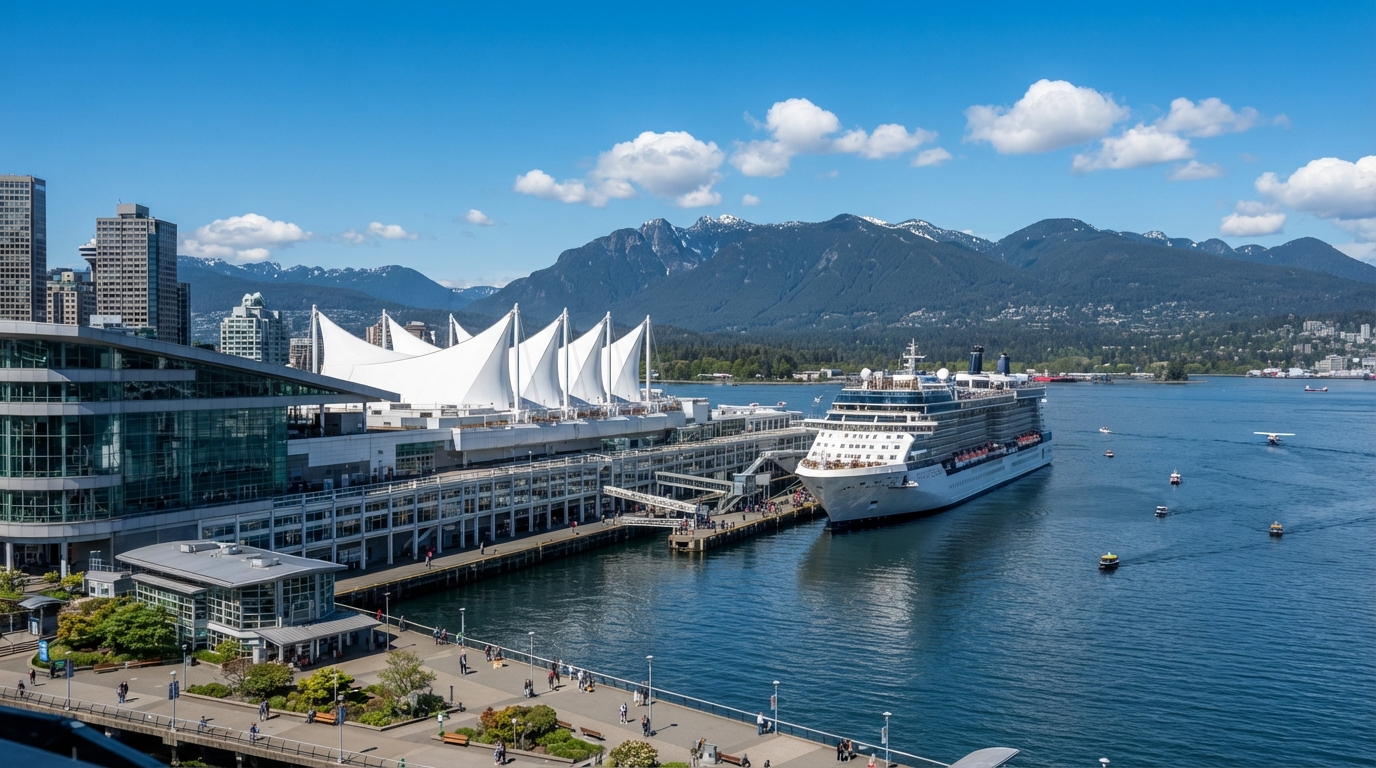
    Canada Place and the Vancouver Convention Centre on the Burrard Inlet waterfront
    Canada Place and the Convention Centre on the Burrard Inlet, with the North Shore mountains behind.

    At a Glance

    Vancouver in eight numbers

    Population (city)
    ≈ 662,000
    Metro population
    ≈ 2.64 million
    Region
    Metro Vancouver, BC
    Incorporated
    1886
    Area (city)
    ≈ 115 km²
    Median age
    ≈ 39 years
    Median household income
    ≈ $82,000 (before tax)
    Postal codes
    V5K–V6Z

    Neighbourhoods

    A peninsula of distinct pockets, each with its own centre of gravity

    Vancouver is a city of named neighbourhoods rather than numbered wards. Each has a main street it organizes around, a housing type it is known for, and a character that is genuinely different from the one beside it. Strata-titled condos are the dominant form of ownership downtown and in the inner ring, which means monthly strata fees and bylaws are part of nearly every purchase. Detached houses are increasingly rare and expensive in the city proper.

    Downtown & West End

    The dense business and residential core, bounded by the water on three sides. The West End is a leafy grid of older low-rise and high-rise rentals steps from English Bay. Downtown proper mixes offices, condos, and the Robson shopping strip. Mostly apartments and condos; almost no detached houses.

    Condos & rentalsWalkableNo detached homes

    Yaletown & False Creek North

    Former rail yards turned glass-condo district along False Creek, built out for Expo 86. High-rise living, seawall access, and the seawall-side David Lam Park. Mostly strata condos built since the late 1980s.

    High-rise condosSeawallExpo-era

    Kitsilano

    Beachside neighbourhood west of Burrard, known for Kits Beach, West 4th Avenue shopping, and a mix of low-rise apartments and remaining character houses. Popular with young families and renters; pricey.

    BeachLow-rise apartmentsWest 4th Ave

    Mount Pleasant & Main Street

    The inner east side, running up from False Creek along Main Street. A mix of heritage houses, new mid-rise rentals, breweries, and independent shops. One of the more affordable central pockets.

    Heritage housesBreweriesMid-rise rentals

    Commercial Drive

    The old Little Italy strip, now a mixed, politically left, arts-leaning neighbourhood east of the downtown core. Low-rise apartments and older houses, strong café and music-bar culture.

    Cafés & barsLow-riseEclectic

    Dunbar, Kerrisdale & Point Grey

    West-side residential neighbourhoods of mostly single-family houses, UBC at the western edge, and Pacific Spirit Park. Quieter, greener, and among the most expensive detached-house areas in the city.

    Detached housesUBC-adjacentQuiet

    East Vancouver (Hastings-Sunrise, Renfrew)

    The working-class east side, with more ground-oriented houses, the PNE and Hastings Park, and some of the city's relatively more attainable single-family stock. Diverse and steadily densifying.

    Ground-orientedPNEDensifying

    What It Costs

    Consistently among the most expensive housing in Canada

    Vancouver has been one of the least affordable housing markets in North America for over a decade. Rents and purchase prices are high relative to local incomes, and the city's geography, limited land, and steady in-migration all push in the same direction. Budget for it rather than being surprised by it. The figures below are typical ranges for the city of Vancouver; confirm current numbers before you act.

    Rents (city of Vancouver)

    A one-bedroom apartment typically rents in the mid-$2,000s to low-$3,000s per month depending on area and age; two-bedrooms from the high-$2,000s to mid-$3,000s and up. Downtown and the West Side run higher; East Vancouver and older buildings run lower. Rents are quoted monthly and usually require first month's deposit only, no last month's deposit under BC law.

    1BR ~$2,400+2BR ~$3,000+First month only

    Home prices

    A typical condo sells in the high hundreds of thousands to well over a million depending on size and location. Townhouses and detached houses are substantially more, with detached houses on the West Side routinely in the multi-millions. Prices vary sharply by neighbourhood and property type.

    Condos from ~$700k+Detached in the millionsVaries by area

    Property tax & utilities

    BC property taxes are moderate relative to assessed values compared with other major cities. Budget separately for BC Hydro electricity, FortisBC or municipal gas, water and sewer billed by the City, and internet. Strata fees on condos cover building maintenance, insurance, and sometimes hot water, and can be significant.

    BC HydroFortisBC gasStrata fees

    What is notably more or less

    Housing, dining out, alcohol, and childcare are notably expensive. Car insurance through ICBC is mandatory and not cheap. Transit is comparatively affordable, and the climate means lower heating bills than most of Canada. Groceries run higher than inland Canada due to transport.

    ICBC insuranceHigh dining costsAffordable transit

    Parks & Recreation

    A thousand-hectare forest at the city's front door, and a seawall tying it together

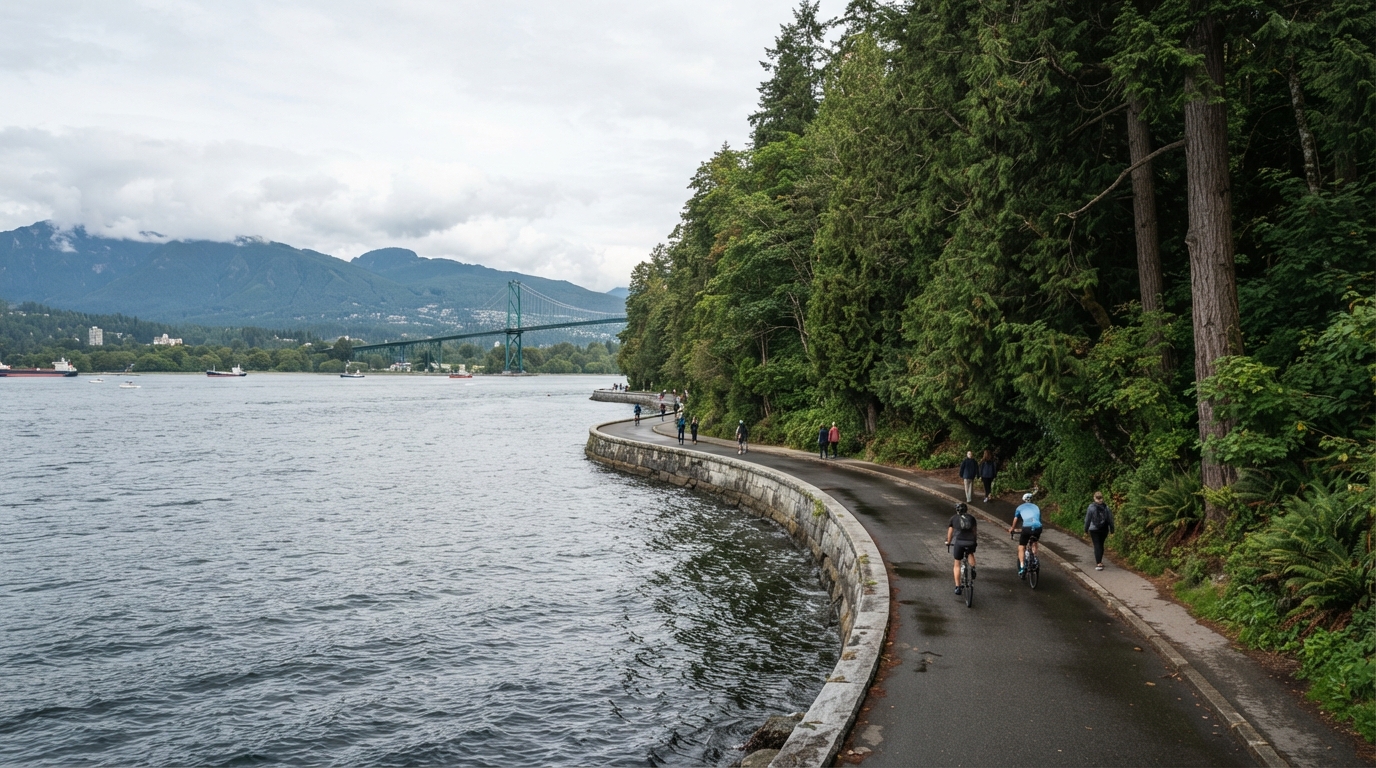
    Vancouver's park system is run by the Vancouver Board of Parks and Recreation and is unusually central to daily life. The 28 km seawall is the spine of it, a continuous waterfront path for walking and cycling that loops Stanley Park and runs along False Creek and English Bay. Beyond it, the city is dotted with neighbourhood parks, and Pacific Spirit and the North Shore mountains sit minutes from downtown.

    The Stanley Park Seawall along the ocean with old-growth forest and Lions Gate Bridge in the distance
    The Stanley Park Seawall, the longest uninterrupted waterfront path in the world.

    Stanley Park

    A 400-hectare old-growth-forest peninsula west of downtown, with the seawall, Brockton Point totem poles, the Vancouver Aquarium, Lost Lagoon, and forested trails. One of the largest urban parks in North America and the city's defining green space.

    400 haSeawallAquarium

    Pacific Spirit Regional Park

    Over 750 hectares of forest on the western edge of the city around UBC, with dozens of kilometres of walking and trail-running trails through second-growth forest. The closest thing to wilderness within city limits.

    750+ haTrail runningUBC-adjacent

    Queen Elizabeth Park & Bloedel Conservatory

    A hilltop park on the old Little Mountain quarry, with city views, gardens, a pitch-and-putt golf course, and the domed Bloedel Conservatory of tropical birds and plants. One of the highest points in the city.

    City viewsConservatoryPitch & putt

    The Seawall

    A roughly 28 km continuous waterfront path for pedestrians and cyclists from the Convention Centre around Stanley Park and along False Creek to Kitsilano. The longest uninterrupted waterfront path in the world and the city's most-used recreation asset.

    28 kmWalk & cycleWaterfront

    Evergreen (Jericho) & Hastings Park

    Jericho Beach Park on the Point Grey waterfront offers beach, grass, and sail-club access; Hastings Park in East Vancouver is the grounds of the PNE and Playland and hosts the fair each summer. Both serve the east and west ends respectively.

    Jericho BeachPNE groundsEast & west

    Water & Swimming

    An ocean pool, a winter-only indoor network, and a cold bay you can swim in anyway

    Vancouver's swimming is split between a famous outdoor saltwater pool on the ocean, a network of indoor pools that run through the winter, and the bay itself, which is cold but swimmable in summer with a wetsuit. The Park Board operates the public pools and beaches; most are pay-per-visit with multi-visit passes and leisure-access cards available.

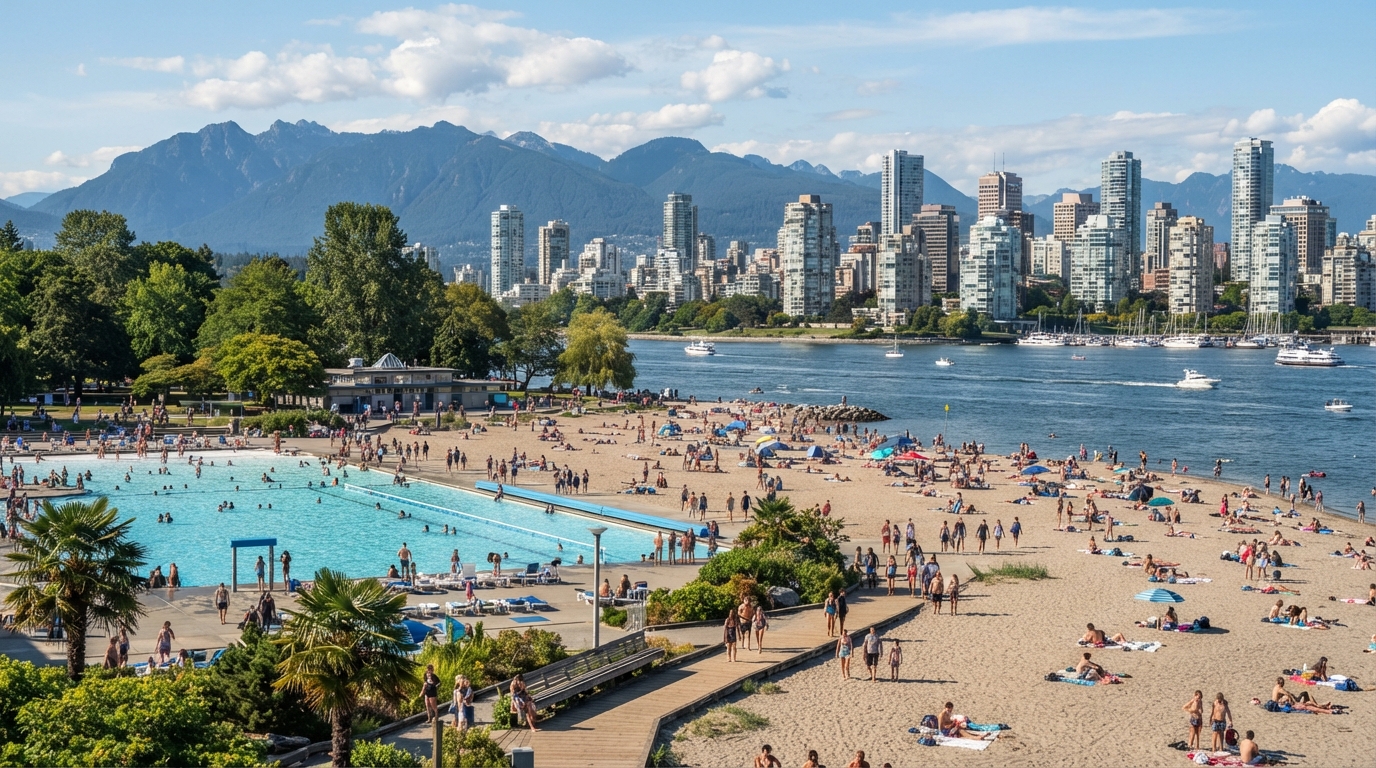
    Kitsilano Beach and the saltwater Kitsilano Pool on English Bay with the downtown skyline behind
    Kitsilano Beach and the saltwater Kits Pool, the longest pool in Canada.

    Kitsilano Pool

    A 137-metre heated outdoor saltwater pool right on Kits Beach, open late spring through early fall. The longest swimming pool in Canada and the city's signature summer swim. Pay-per-entry; arrives early on hot days as it fills up.

    137 m saltwaterSummer onlyKits Beach

    Vancouver Aquatic Centre

    The downtown indoor 50-metre pool under the Burrard Bridge, open year-round with lane swimming, diving, and a fitness centre. The main central indoor option for lap swimmers through the wet months.

    50 m indoorYear-roundDowntown

    Hillcrest Aquatic Centre

    A large indoor pool and leisure centre in Riley Park next to Nat Bailey Stadium, built on the 2010 Winter Olympics curling legacy. Lane swim, leisure pool, and fitness facilities; one of the busiest family pools in the city.

    IndoorLeisure poolRiley Park

    Second Beach & English Bay

    The downtown-facing sandy beaches on the south side of Stanley Park, with a heated outdoor pool at Second Beach and supervised swimming in summer. The most accessible ocean swim from the West End and downtown.

    Outdoor poolBeach swimStanley Park edge

    Local ocean swimming

    Open-water swimmers use English Bay, Kits Beach, and Jericho in summer, almost always in wetsuits as the Pacific rarely clears 18°C. The Polar Bear Swim at English Bay on New Year's Day is a long-standing local ritual.

    Wetsuit advisedEnglish BayPolar Bear Swim

    Sports & Fitness

    Pro teams downtown, community centres in every pocket, and a mountain 20 minutes away

    Vancouver's sport runs from NHL and MLS franchises downtown to a community-centre-based recreation system that is genuinely local. The Park Board runs community centres across the city, most with gyms, pools, and registered programs, and the North Shore mountains put skiing and mountain biking within a short drive of downtown.

    Rogers Arena & BC Place

    The downtown indoor stadiums: Rogers Arena is home to the NHL's Vancouver Canucks, BC Place to the CFL's BC Lions and MLS's Vancouver Whitecaps. Both host major concerts and events year-round, steps from Stadium SkyTrain.

    Canucks NHLWhitecaps MLSDowntown

    Community centres

    A network of jointly-operated Park Board community centres, one per neighbourhood, each with a gym, fitness rooms, and registered programs from yoga to basketball. Membership and drop-in rates are modest; this is the everyday fitness backbone of the city.

    Per-neighbourhoodDrop-in gymRegistered programs

    Nat Bailey Stadium

    A small classic minor-league baseball park in Riley Park, home to the Vancouver Canadians (C's) of the Northwest League. A summer-evening fixture; affordable and family-friendly compared with the downtown stadiums.

    Minor-league ballSummer eveningsRiley Park

    Golf & pitch-and-putt

    Public courses include McCleery, Fraserview, and Langara, all City-operated, plus the Queen Elizabeth Park pitch-and-putt. Tee times book up in the dry months; the season runs roughly March through October, weather permitting.

    3 city coursesPitch & puttMar–Oct

    North Shore mountains

    Cypress, Grouse, and Seymour ski areas sit across the harbour on the North Shore, roughly 20 to 40 minutes from downtown by car. Downhill and cross-country skiing in winter, hiking and mountain biking the rest of the year. Grouse has the Grouse Grind, a steep, famous uphill trail.

    3 ski hills20–40 minGrouse Grind

    Kids, Leagues & Activities

    Leagues that fill up fast, and a registration calendar that punishes late arrivals

    Youth sport in Vancouver is organized through community-centre associations, the Vancouver School Board, and provincial sport bodies, and most of it runs on seasonal registration that opens and closes on set dates. A family arriving mid-year will have missed some windows; the practical move is to find out what is open now and get on the waitlist for the next intake. Below are the main organized options; confirm exact registration dates with each body.

    Community-centre soccer

    House-league soccer runs through neighbourhood community centres and the Vancouver Youth Soccer Association, typically fall and spring seasons for ages 5 to 18. Registration commonly opens in late spring for the fall season and fills quickly; get on the list early.

    Ages 5–18Fall & springRegister in spring

    Vancouver Thunderbirds minor hockey

    The main minor-hockey association serving Vancouver, with teams from initiation through to midget and female divisions, season running roughly September to March. Registration typically opens in late spring or early summer; ice is scarce so late registration often means a waitlist.

    Sep–Mar seasonRegister springWaitlists common

    Swim clubs

    Competitive and pre-competitive swim clubs such as the Vancouver Vikings and UBC Dolphins train at city and university pools, with tryouts and registration ahead of each season. A good route for kids who outgrow swim lessons and want to race.

    VikingsUBC DolphinsTryout-based

    Scouts, dance, music & martial arts

    Scouts Canada groups meet at community centres and churches across the city; dance, music, and martial-arts schools cluster on Main Street, Commercial Drive, and Kitsilano. Most run on term-based registration; summer camps fill by spring.

    Scouts CanadaTerm-basedCamps fill by spring

    Summer camps

    The Park Board, community centres, UBC Camps, and private providers run day camps through July and August, with registration commonly opening in early spring. Popular camps fill within days of opening; plan to register the week booking opens.

    Jul–AugRegister early springFill fast

    Shopping & Dining

    A market under the bridge, two main shopping streets, and a lot of small kitchens

    Vancouver's shopping runs along a few named retail streets rather than in big malls, though Pacific Centre and Metrotown (in adjacent Burnaby) are the main enclosed centres. The dining scene is dense, international, and built around neighbourhood restaurants and a strong brewery culture. Granville Island is the city's public market and the closest thing to a central food hall.

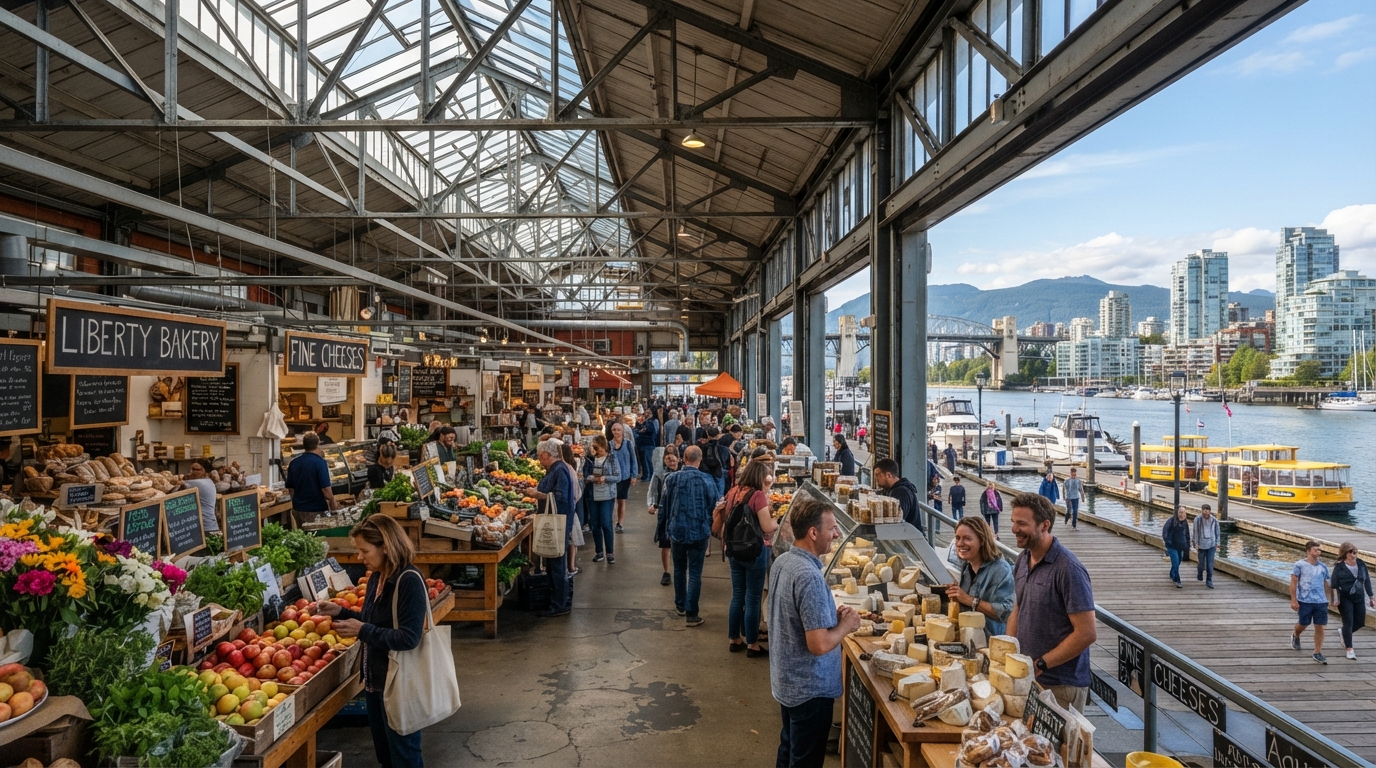
    Granville Island Public Market stalls of fresh produce under the metal truss building on False Creek
    Granville Island Public Market on False Creek.

    Granville Island Public Market

    A former industrial site under the Granville Bridge turned into a market and artisan district on False Creek. The public market is open daily with produce, seafood, bakeries, and prepared food; the surrounding buildings hold studios, theatres, and a brewery. Busy on weekends.

    Open dailyProduce & seafoodUnder Granville Bridge

    Robson & Alberni streets

    The downtown shopping spine: Robson Street for mainstream retail and chains, Alberni Street a short stretch of higher-end dining and hotels nearby. The most tourist-facing retail in the city, walkable from the West End.

    DowntownMainstream retailWalkable

    Main Street & Mount Pleasant

    The independent retail and dining strip running south from False Creek along Main Street, with vintage, design stores, breweries, and restaurants. The neighbourhood-shopping heart of the east side.

    Independent shopsBreweriesSouth of False Creek

    Commercial Drive

    The old Little Italy strip, now a mix of Latin, Italian, and indie cafés, bars, and small grocers. The most characterful dining and coffee street on the east side, busy in the evenings.

    Italian & LatinCafésEvenings

    Grocery chains

    The main chains are Save-On-Foods, Safeway, and No Frills across the city, with Whole Foods and Choices for higher-end and organic. T&T is the main Asian supermarket chain; H-Mart and small independent grocers serve the Korean and Japanese communities.

    Save-On-FoodsT&TChoices

    Breweries & farmers markets

    A concentration of craft breweries around Mount Pleasant and False Creek, many with taprooms. Farmers markets run weekly at Trout Lake, Kitsilano, Main Street, and the West End through the warmer months, run by Vancouver Farmers Markets.

    Mount Pleasant breweriesTrout Lake marketWeekly in season

    Arts, Events & Nightlife

    A mid-sized city's cultural life, with Seattle a short train ride south

    Vancouver's arts and nightlife are real but modest for a city its size, partly because of licensing and partly because so much of the population is outdoors in the evenings. There is a symphony, a major art gallery, an opera, several theatres, and a strong live-music bar scene on the east side. For bigger tours and a larger cultural calendar, Seattle is a same-day trip by train or car.

    Vancouver Art Gallery

    The province's main public art gallery, in the old courthouse downtown at Robson Square, holding the world's largest collection of Emily Carr work plus rotating contemporary exhibitions. A central landmark of the downtown cultural core.

    Emily CarrRobson SquareDowntown

    Orpheum & Chan Centre

    The Orpheum is the ornate 1927 downtown theatre home to the Vancouver Symphony Orchestra and touring acts; the Chan Centre at UBC is the city's main concert hall for classical and world music. Both anchor the city's classical-music calendar.

    VSO1927 theatreChan Centre at UBC

    The Cinematheque & VIFF Centre

    The Cinematheque on Howe Street programs repertory and art-house cinema year-round; the VIFF Centre is the year-round home of the Vancouver International Film Festival, one of the largest in North America each autumn.

    Art-house cinemaVIFF each fallHowe Street

    East-side live music

    Small live-music venues and bars cluster on Main Street, Commercial Drive, and around Strathcona, with the Commodore Ballroom downtown the long-standing mid-size room. The scene skews indie and rock; larger tours play Rogers Arena or the Pacific Coliseum.

    Commodore BallroomMain Street barsIndie-leaning

    Festivals

    Recurring annual events include the Vancouver Folk Music Festival at Jericho Beach in mid-summer, the Celebration of Light fireworks competition over English Bay in late July, and the Pacific National Exhibition running late August into September at Hastings Park.

    Folk FestCelebration of LightPNE in late summer

    Schools & Education

    One public district, a strong independent sector, and catchments you must confirm by address

    Public schools in the city of Vancouver are run by a single board, the Vancouver School District (SD 39), one of the largest in the province. It operates neighbourhood catchment schools plus district programs like French immersion and Montessori, and a large, long-established independent (private) sector sits alongside it. Post-secondary is anchored by UBC and SFU. Catchment boundaries are not intuitive and must be confirmed with the district against a real address before you count on a school.

    Vancouver School District (SD 39)

    The single public board for the city, running elementary and secondary catchment schools plus choice programs such as French immersion, Mandarin bilingual, and Montessori. Catchment assignment is by home address; cross-boundary and choice programs are limited and often waitlisted.

    Single districtFrench immersionCatchment by address

    Independent schools

    A large independent sector including long-established schools such as St. George's, Crofton House, York House, Vancouver College, and Stratford Hall, across a range of denominations and pedagogies. Most are fee-charging with their own admissions calendars and application deadlines.

    Fee-chargingOwn admissionsApply early

    UBC & SFU

    The University of British Columbia, a major research university at the western edge of the city at Point Grey, and Simon Fraser University, whose main campus sits on Burnaby Mountain just east of the city. Both anchor the region's post-secondary system along with smaller institutions downtown.

    UBC at Point GreySFU on Burnaby MtnResearch universities

    Daycare & before/after-school care

    Licensed daycare, preschool, and before- and after-school care are run by a mix of non-profits, community centres, and private operators, with $10-a-Day reduced-fee spaces expanding under the provincial plan. Waitlists are common; register with multiple providers as early as possible.

    Licensed careWaitlists common$10-a-Day spaces

    Healthcare & Practical Services

    A public system you register into, and a family-doctor shortage that is real

    Healthcare in BC is publicly funded through the provincial Medical Services Plan (MSP), which covers medically necessary services for residents. The practical catch for newcomers is that finding a family doctor who is accepting patients is genuinely difficult; many residents use walk-in clinics and, increasingly, the provincial Health Connect registry to be matched with a primary-care provider. Emergency care is at the hospitals.

    Vancouver General Hospital (VGH)

    The city's largest hospital and a major teaching and trauma centre, in the Fairview area near Oak Street. The regional referral hospital for complex care, with a busy emergency department. UBC Hospital nearby is part of the same health authority.

    Teaching hospitalLevel 1 traumaFairview

    St. Paul's & Mount Saint Joseph

    St. Paul's Hospital downtown is a long-standing acute-care and teaching hospital with a busy emergency department; Mount Saint Joseph in East Vancouver is a community hospital in the same Providence Health network. St. Paul's is being replaced by a new campus in the False Creek Flats.

    Downtown acute careProvidence networkNew campus coming

    Urgent & Primary Care Centres

    The province operates Urgent and Primary Care Centres for non-emergency issues that need same-day attention, alongside private walk-in clinics. Useful when you cannot reach a family doctor and it is not a 911 emergency; check current locations with HealthLink BC.

    Same-day careWalk-in clinicsHealthLink BC

    Registering with a family doctor

    New residents register with MSP, then search for a family doctor. Many practices are closed to new patients; register with Health Connect, the province's waitlist matching service, and use walk-ins or UPCCs in the meantime. Bring your CareCard or PHN once enrolled.

    MSP registrationHealth Connect waitlistWalk-ins meanwhile

    Pharmacies, library & city hall

    Pharmacies (Shoppers Drug Mart, London Drugs, independents) are on most main streets and can immunize and renew many prescriptions. The Vancouver Public Library's central branch is the striking Coliseum-shaped building downtown, with branches in every neighbourhood. City Hall is at 12th and Cambie.

    Shoppers & London DrugsVPL central branch12th & Cambie

    Getting Around

    A compact downtown, a SkyTrain spine, and a car that is optional until it isn't

    Vancouver is one of the few North American cities where a household can realistically live without a car, at least in the central neighbourhoods. The SkyTrain rapid-transit spine, a dense bus network, the SeaBus to the North Shore, and walkable neighbourhood cores cover most daily needs. A car becomes useful for the North Shore mountains, the suburbs, and Costco runs; a second car is rarely necessary in the city proper.

    SkyTrain

    The driverless rapid-transit system with three lines: the Expo and Millennium lines running east-west and the Canada Line south to Richmond and the airport. The spine of regional transit; runs frequently and connects downtown to the suburbs.

    3 linesDriverlessTo airport & Richmond

    Buses & SeaBus

    TransLink runs the bus network, including trolley buses downtown and frequent express services on main corridors. The SeaBus is the passenger ferry from Waterfront Station across the Burrard Inlet to the North Shore, every 15 minutes or better most of the day.

    TransLinkTrolley busesSeaBus to North Shore

    Cycling & the seawall

    A growing network of protected bike lanes plus the seawall make cycling practical year-round for commuting and recreation. Mobi by Shaw is the public bike-share system. Rain in winter deters casual riders but not committed commuters.

    Protected lanesMobi bike-shareSeawall

    Highways & routes

    The main regional routes are the Trans-Canada Highway (Hwy 1) across the north and east, Highway 99 south to the US border and the Tsawwassen ferry, and the Lions Gate and Ironworkers Memorial bridges to the North Shore. There is no freeway through the downtown core, which keeps it walkable but means traffic on surface streets.

    Hwy 1Hwy 99 to US borderNo downtown freeway

    Airport access

    Vancouver International Airport (YVR) sits on Sea Island in Richmond, about 25 to 40 minutes from downtown by the Canada Line SkyTrain or car. The Canada Line is the easiest downtown-to-airport connection and runs early and late.

    YVR in RichmondCanada Line~25–40 min

    Winter driving

    Snow in the city is infrequent and usually light, but a few days each winter bring chaos because few drivers run winter tires in town. The North Shore and the highways over the passes are a different matter: winter tires are strongly advised and sometimes required by law from October through March.

    Rare city snowTires for the passesOct–Mar

    Work & Local Economy

    A port, a film industry, a tech sector, and a lot of people who commute across the region

    Vancouver's economy runs on the port, the resource trade it handles, a large film and television production sector, a growing tech industry, tourism, and a substantial public-sector and health-and-education workforce. Many residents work in the city but many also commute to the surrounding municipalities, which is part of why regional transit matters as much as it does.

    Port of Vancouver

    Canada's largest port and the largest in tonnage on the west coast of the Americas, handling container, bulk, grain, and auto cargo across terminals in the city and neighbouring municipalities. A core economic engine and major employer of longshore and logistics workers.

    Largest in CanadaContainers & bulkLogistics jobs

    Film & television

    A major North American production centre nicknamed Hollywood North, with studios across the city and region and steady work in film, television, and visual effects. Driven by the exchange rate, tax credits, and similar time zone to Los Angeles.

    Hollywood NorthVFX & studiosTax-credit driven

    Tech sector

    A growing technology sector concentrated downtown and in Mount Pleasant, spanning software, gaming, clean tech, and digital media, with local and global employers. The largest single private-sector office cluster downtown is tech-anchored.

    Downtown & Mt PleasantGaming & softwareGrowing

    Public sector & health

    Large public-sector and health employers include the provincial government, the regional health authorities, UBC and SFU, the school districts, and TransLink. Together with the port and hospitals, these are among the most stable sources of local employment.

    Health authoritiesUniversitiesProvincial government

    Commuting & coworking

    Many residents commute to Burnaby, Richmond, Surrey, and the North Shore for work, mostly by SkyTrain or car. Downtown and Mount Pleasant have the main concentration of coworking spaces for remote and freelance workers.

    Regional commuteBurnaby & SurreyCoworking downtown

    Climate & Seasons

    A wet winter, a dry summer, and four seasons that feel different from the rest of Canada

    Vancouver has an oceanic climate, which means mild wet winters and warm dry summers rather than the frozen winters and humid summers of most of Canada. It is one of the warmest cities in the country in winter and one of the driest in summer. Here is what each season actually feels like, plus one piece of moving advice tied to the time of year you arrive.

    Winter

    Wet and mild, 5–8°C, rain on roughly half the days. Snow in the city is rare and brief; the mountains hold snow all season.

    Spring

    Warming and still showery, 10–16°C by May. Cherry blossoms in March and April; trails and seawall come back to life.

    Summer

    Dry and warm, 20–25°C, low humidity, long evenings. The best season; book campsites and ferries well ahead.

    Autumn

    Cooling and wetter from October, 10–15°C dropping. Fall colour in October, then the rain returns in earnest by November.

    If you are moving in winter, expect rain, not snow, and arrive with waterproof boots, a good raincoat, and a plan to get outside anyway. Locals do not stop for the rain; they dress for it. Schedule outdoor-heavy unpacking for a dry window in summer if you can.

    Safety & Local Hazards

    Two numbers to save, and a few hazards that actually apply here

    Vancouver is a generally safe city by North American standards, with the usual big-city precautions around downtown late at night. The hazards that actually apply here are specific: a serious opioid-overdose crisis concentrated in the Downtown Eastside, winter storm risk, and the permanent background of earthquake and tsunami awareness on the coast. Save the non-emergency numbers and know what to do for each.

    Emergency & non-emergency numbers

    Call 911 for fire, police, and ambulance emergencies. For non-emergency police matters in Vancouver, the non-emergency line is the VPD line (confirm the current number with the City of Vancouver). For non-urgent health questions, call HealthLink BC at 811.

    911 emergency811 HealthLinkVPD non-emergency

    Earthquake & tsunami

    The BC coast is active earthquake country. The practical expectation is to be ready to shelter in place: secure heavy furniture, keep an emergency kit, and know that the coastal zone has tsunami notification zones. The City and ShakeOutBC run an annual drill each October.

    Coastal seismic zoneShakeOut drill OctEmergency kit

    Winter storms & power outages

    Wind and atmospheric-river storms can knock out power and, rarely, flood low areas in winter. Keep flashlights, charge devices, and report outages to BC Hydro. Freezing rain occasionally disrupts transit for a day or two.

    Wind stormsBC Hydro outagesAtmospheric rivers

    Overdose awareness

    An ongoing toxic-drug crisis is concentrated in the Downtown Eastside. The practical guidance for any resident is to carry naloxone, available free from pharmacies and harm-reduction sites, and to know the signs of overdose. It is a public-health issue that affects the whole region.

    Downtown EastsideCarry naloxoneFree from pharmacies

    Faith Communities

    Established congregations across denominations and faiths, found mostly by walking in

    Vancouver has a broad mix of long-established Christian denominations, a large Buddhist and Sikh presence reflecting the city's East and South Asian communities, Muslim and Jewish congregations, Hindu temples, and newer evangelical and non-denominational churches. Newcomers usually find a community by attending a service or by asking at a neighbourhood community centre; most congregations welcome visitors and post service times online.

    Mainline & Catholic parishes

    Long-established Anglican, United Church, Presbyterian, and Roman Catholic parishes sit across the city, many in heritage buildings downtown and in the older neighbourhoods. Christ Church Cathedral (Anglican) downtown and Holy Rosary Cathedral (Catholic) are central landmarks.

    AnglicanCatholicUnited Church

    Sikh gurdwaras

    A large and long-established Sikh community, with gurdwaras in Vancouver and across the region, notably in South Vancouver and neighbouring Surrey. All are open to visitors regardless of faith; cover your head and remove shoes to enter.

    South VancouverOpen to allHead covering

    Buddhist temples

    Buddhist temples serving Chinese, Japanese, Vietnamese, and Tibetan communities, plus secular meditation centres, are found across the city, with a concentration in Strathcona and the east side. The annual Vesak observances are public.

    Strathcona & east sideMultiple traditionsVesak observances

    Muslim, Jewish & Hindu

    Muslim associations run mosques and community centres across the city; the Jewish community is centred on the Jewish Community Centre in the Oakridge area; Hindu temples serve the South Asian community in Vancouver and neighbouring municipalities.

    JCC OakridgeCity mosquesRegional Hindu temples

    Pets

    A dog-licensing city with off-leash beaches and a 24-hour emergency vet

    Vancouver is a pet-friendly city with off-leash areas in several parks and on certain beaches, a clear licensing rule for dogs, and a good network of veterinary clinics including a 24-hour emergency hospital. The City requires dog licences, renewed annually, and enforces leash rules outside designated off-leash areas and times.

    Dog licensing

    The City of Vancouver requires every dog over three months old to be licensed annually, with fees lower for spayed or neutered dogs. Licences are bought through the City; the tag helps reunite lost dogs and is required to use the off-leash areas.

    Annual licenceDiscounted if fixedRequired for off-leash

    Off-leash parks & beaches

    Designated off-leash areas include parts of Stanley Park, Trout Lake, and several neighbourhood parks, plus seasonal off-leash zones on Spanish Banks and other beaches. Hours and seasons vary by site; check the Park Board's current off-leash map before you go.

    Stanley ParkTrout LakeSeasonal beaches

    Veterinary clinics

    Veterinary clinics operate across the city, many on main streets like Main, Cambie, and West 4th. For after-hours emergencies, the Vancouver Animal Emergency Hospital is the 24-hour referral facility; confirm its current location and hours before you need it.

    24-hour emergencyMain-street clinicsConfirm hours

    Boarding & grooming

    Boarding kennels, day-care, and grooming services cluster in the industrial edges of Mount Pleasant, False Creek Flats, and East Vancouver, with several cat-only and fear-free certified options. Book boarding well ahead of school breaks and holidays.

    Mount PleasantDay-care optionsBook ahead

    Community & Local Groups

    Where people actually keep up, which is mostly online and named

    Beyond the community centres and the library, the day-to-day social fabric of Vancouver lives online in named groups and accounts. Newcomers who want to know what is happening on their block, find a babysitter, or get a contractor recommendation join the local Facebook groups, follow the neighbourhood Instagram accounts, and check the city subreddit. The names below are the ones people actually use; confirm current handles before you rely on them.

    Vancouver Public Library

    The central branch downtown plus neighbourhood branches in every pocket, offering free memberships, events, study space, and digital collections. The library is one of the most-used public institutions in the city and a practical first stop for newcomers.

    Central + branchesFree membershipEvents

    Community centres

    Each neighbourhood's community centre is the local hub for registered programs, fitness, and events, jointly operated by the Park Board and local associations. Joining your local centre's membership is the standard way to meet people nearby.

    One per neighbourhoodMembershipPrograms

    Facebook & Nextdoor groups

    Neighbourhood-level Facebook groups (for example Kitsilano, Mount Pleasant, and Commercial Drive community groups) and Nextdoor are where residents trade recommendations and alerts. Search the platform for your neighbourhood name plus 'community' or 'residents'.

    Per-neighbourhoodRecommendationsAlerts

    Reddit & Instagram

    The r/vancouver subreddit is the main city-wide discussion forum for news, questions, and events; neighbourhood Instagram accounts document local life and small businesses. Confirm exact handles on the platforms, as they change.

    r/vancouverNeighbourhood IGConfirm handles

    Newcomer & volunteer groups

    Settlement agencies such as MOSAIC and S.U.C.C.E.S.S. support newcomers, especially immigrants, with language, employment, and community programs; Volunteer Vancouver connects residents with local causes. Practical entry points for people arriving without a local network.

    MOSAICS.U.C.C.E.S.S.Volunteer Vancouver

    The Yearly Calendar

    The rhythm that recurs, and where the live calendar lives

    Rather than list dated one-off events, here is the rhythm that recurs each year, which stays true for years. The farmers markets run on set weekdays through the warmer months, the fireworks and the folk festival fall in mid-summer, and the PNE closes out the summer in late August. For the current dates of any of these, the City of Vancouver and the individual organizers keep live calendars.

    Farmers markets

    Vancouver Farmers Markets runs weekly markets at Trout Lake, Kitsilano, Main Street Station, and the West End, typically Saturday or Sunday mornings from spring through late autumn, with a smaller winter market at Nat Bailey Stadium. The day of the week is fixed per location; check the current schedule.

    Weekly in seasonTrout Lake SunWinter at Nat Bailey

    Celebration of Light

    An international fireworks competition over English Bay, typically held on three nights over a week in late July, with teams synchronizing displays to music. Watched from English Bay, Kits Beach, or the seawall; very crowded.

    Late JulyThree nightsEnglish Bay

    Folk Music Festival

    The Vancouver Folk Music Festival at Jericho Beach, a weekend of outdoor folk and world music in mid-summer. A laid-back, family-friendly festival on the beach; tickets sell ahead.

    Jericho BeachMid-summer weekendTickets ahead

    PNE & Pacific National Exhibition

    The PNE runs the fairground at Hastings Park with rides, agriculture, concerts, and the Summer Night Concerts, typically the last two weeks of August into Labour Day weekend. The city's biggest end-of-summer event; Playland operates as a separate amusement park earlier in summer.

    Late Aug–Labour DayHastings ParkSummer Night Concerts

    Where the live calendar lives

    The City of Vancouver events page, Destination Vancouver's events listings, and the individual organizers each keep a current calendar. For anything you plan around, check the organizer's site for the year's exact dates rather than relying on a fixed date.

    City events pageDestination VancouverOrganizer sites

    Who Lives Here

    A mid-sized, international, slowly growing city, reported as statistics

    The figures below are reported by Statistics Canada from the most recent census and by the City of Vancouver. They are presented as statistics about the population, not as a recommendation about where anyone should live; a neighbourhood's character is not a comment on who would fit there.

    Population & growth

    The city of Vancouver has roughly 660,000 residents, with the Metro Vancouver region at about 2.6 million. The city's population has grown steadily but slowly in recent years, constrained by limited land and densification rather than sprawl.

    ~660k city~2.6m metroSlow steady growth

    Age & households

    The median age is in the mid-30s, younger than the provincial and national average, with a high share of one- and two-person households reflecting the housing stock of apartments and condos. A relatively small share of households are large families with children.

    Median mid-30sSmall householdsFew large families

    Languages spoken

    More than half of residents report a mother tongue other than English or French, with Chinese languages (Mandarin and Cantonese), Punjabi, Tagalog, and Korean among the most common. English is the common language of public life; many neighbourhoods are functionally multilingual.

    Majority non-EnglishMandarin & CantonesePunjabi

    How long people stay

    Vancouver has a mix of long-term residents and high turnover, with significant in-migration from elsewhere in Canada and abroad and out-migration of some residents to cheaper suburbs and other provinces. Mobility is high among renters and younger residents.

    High mobilityIn & out migrationSuburbs draw some

    Nearby & Worth the Drive

    What is within an hour or two, and what people go there for

    One of Vancouver's real advantages is how close the rest of the region and the outdoors are. Within an hour you can be on a North Shore mountain, on a ferry to an island, or in a different municipality; within two or three you can be skiing, wine-tasting, or in another country. These are the trips residents actually make.

    North Shore mountains

    Cypress, Grouse, and Seymour are 20 to 40 minutes from downtown by car across the Lions Gate or Ironworkers Memorial bridges. Skiing in winter, hiking and mountain biking the rest of the year, and the Grouse Grind uphill trail in summer.

    20–40 minSki & hikeGrouse Grind

    Whistler & Sea to Sky

    Whistler is about two hours north along the Sea to Sky Highway, one of the most scenic drives in Canada, past Squamish and the Stawamus Chief. A world-class ski resort in winter and a mountain-biking and hiking destination in summer.

    ~2 hrsSea to Sky HwySki & bike

    Victoria & Vancouver Island

    Reachable by BC Ferries from Tsawwassen (south of Vancouver) to Swartz Bay, roughly a 90-minute sailing plus the drive, or by passenger ferry from downtown. Victoria is the provincial capital; the Island has old-growth forest, coastline, and small towns.

    BC Ferries~90-min sailingProvincial capital

    Fraser Valley & wine country

    East along the Fraser River, the valley opens into farmland and, further east, the wineries of the South Okanagan around Kelowna and Oliver, roughly four hours' drive. Closer in, Langley and Abbotsford offer farms, markets, and a quieter pace within an hour.

    Fraser Valley ~1 hrOkanagan ~4 hrsFarms & wine

    Seattle & the US

    Seattle is about a three-hour drive south via Highway 99 and the Peace Arch border crossing, or a same-day Amtrak Cascades train from Pacific Central Station. Useful for bigger concerts, major-league sport, and a change of country for a weekend.

    ~3 hrs driveAmtrak trainPeace Arch border

    Moving to Vancouver

    Getting a household from Winnipeg to the coast, and what happens after you call

    Quick Transfer Moving and Storage is based in Winnipeg, Manitoba and specializes in long-distance moves to British Columbia, including the cross-country run to Vancouver. This is a short note on what we do and what happens after someone gets in touch, not a sales page. The guide above is meant to be worth reading even if you hire a different mover.

    We handle packing, loading, transport, storage, and delivery so a cross-country move does not have to be a second full-time job. You choose how much of that you want us to take on.

    1. 01

      Get in touch

      Call or request a quote and tell us what you are moving, when, and to where in Vancouver.

    2. 02

      Written estimate

      We take an inventory and give you a written estimate with your dates and delivery window, no surprise charges.

    3. 03

      Pack & load

      We pack, disassemble, and load, or you do and we move. Either way the truck goes west from Winnipeg.

    4. 04

      Deliver & settle

      We deliver to your new Vancouver address, reassemble, and follow up to make sure everything landed right.

    5. 05

      Storage if needed

      If your home is not ready, we hold your shipment in secure storage and deliver when you are.

    Questions we get

    A long-distance move across the prairies and the Rockies to the coast typically runs on a delivery window of a week or two rather than a single fixed day, depending on the season and the size of your shipment. We confirm your specific window when you book and keep you updated as the truck moves west.

    Moving from Winnipeg to Vancouver?

    Talk to a moving specialist and get a written estimate for your dates.

    Talk To A Moving Specialist

    Company

    Quick Transfer Moving and Storage

    A long-distance mover that gets families from the prairies to the coast, and settles them in.

    Quick Transfer Moving and Storage is a long-distance moving company based in Winnipeg, Manitoba, moving households across Canada and specializing in relocations to British Columbia. We handle packing, loading, transport, storage, and delivery so a cross-country move does not have to be a second full-time job.

    Cross-country
    Winnipeg to Vancouver specialists
    Full service
    Packing, storage & delivery
    Written estimates
    No surprise charges
    Based in Winnipeg, Manitoba
    Long-distance moves across Canada
    Call for a written estimate
    Request a quote online

    Newcomer Checklist

    Ten things to do before and after you arrive

    A practical list, each item an instruction rather than a category. Work through it in the weeks before you leave Winnipeg and the first weeks after you land in Vancouver.

    1. 1Apply for a BC Services Card and register with MSP as soon as you arrive; coverage starts after a waiting period, so apply early and keep receipts for any interim private coverage.
    2. 2Register with Health Connect to be matched with a family doctor, and identify the nearest walk-in clinic and Urgent and Primary Care Centre to your new address in the meantime.
    3. 3Confirm your children's school catchment with the Vancouver School District against your exact street address before you count on a placement; do not rely on maps or hearsay.
    4. 4Get a Compass Card and load it for TransLink, or set up contactless payment, so you can ride SkyTrain, bus, and SeaBus from day one without fumbling at the gate.
    5. 5Buy or arrange winter tires if you plan to drive the North Shore or the highways; they are strongly advised and sometimes legally required on high mountain routes from October through March.
    6. 6Register children early for community-centre programs, swim lessons, and summer camps; popular intakes fill within days of opening, often in early spring.
    7. 7Set up BC Hydro for electricity and arrange gas, water, and internet for your move-in date; strata buildings may include some utilities in fees, so check before double-paying.
    8. 8License your dog with the City of Vancouver and locate the nearest off-leash area and a 24-hour emergency vet before you need one.
    9. 9Update your address on your driver's licence, vehicle registration, and ICBC insurance, and switch your health coverage if you are moving from another province.
    10. 10Introduce yourself to your nearest community centre and library branch, and join your neighbourhood's local online group; that is where the practical local knowledge lives.